Archive for October, 2015

AWESOME-tober-fest 2015: Comic adaptations of HG Wells’ The Invisible Man

Posted in books, Classic literature, comic books, monsters, pop culture with tags , , , , , , , on October 5, 2015 by Paxton

Awesometoberfest banner

I’ve always been a fan of comic book adaptations of classic literature.  The most famous versions of this are the Classics Illustrated line of comics from the 50s and 60s.  But several other companies jumped on that bandwagon over the years.

The original HG Wells novel was adapted several times in comic book form. Here are a few of them.

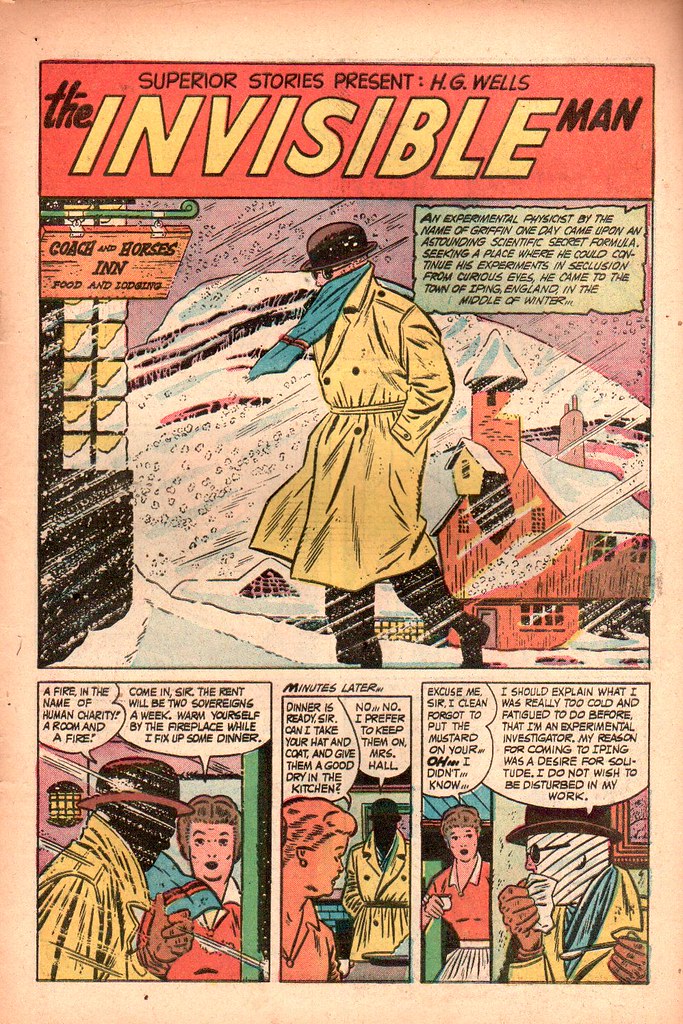
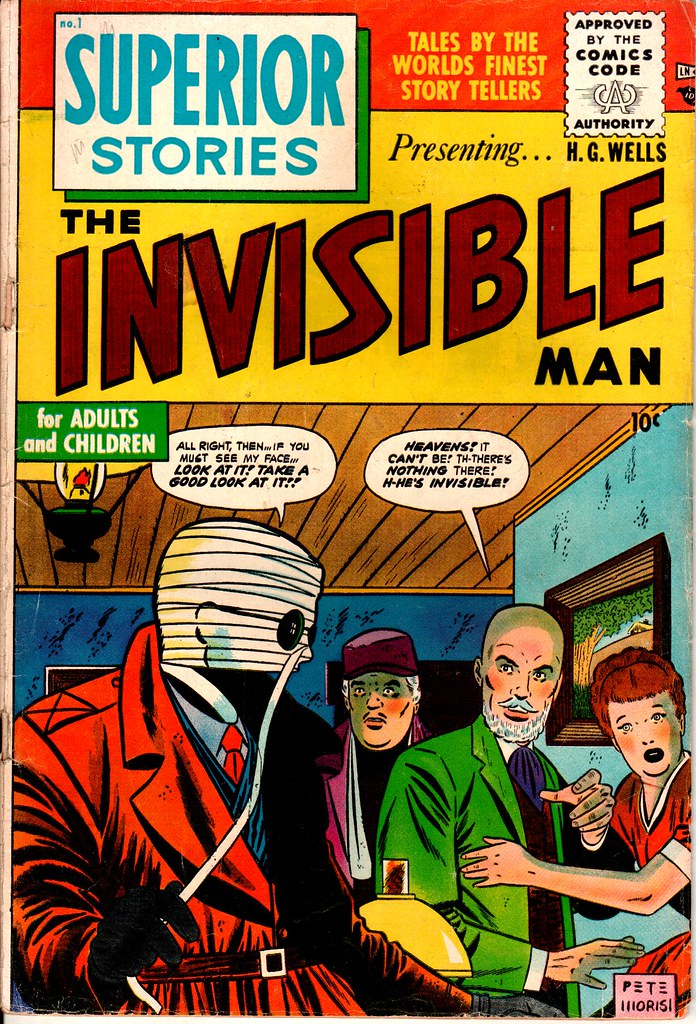
Superior Stories #1 Superior Stories 01 interior
In 1955, Nesbit Publishing released Superior Stories #1 which featured an adaptation of Wells’ novel. Art and inks were done by Pete Morisi.  It was a mostly faithful adaptation except that they ended the story with the death of the lead character and did not include the epilogue from the novel involving the character of Thomas Marvel.  Nearly ten years later this exact adaptation would be reprinted in Fantastic Adventures #18.

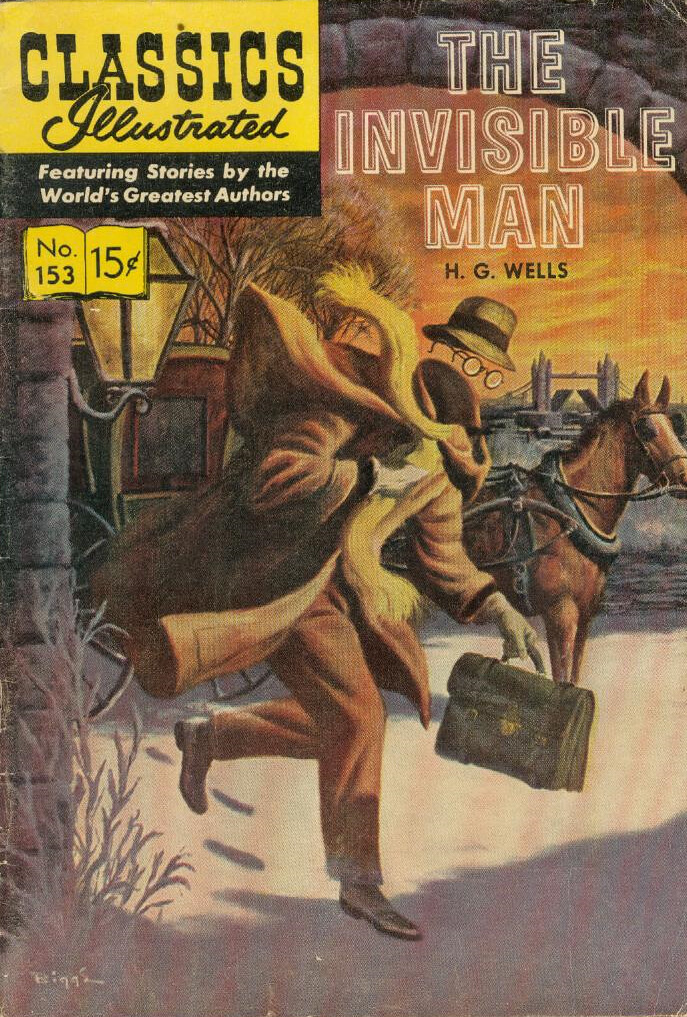
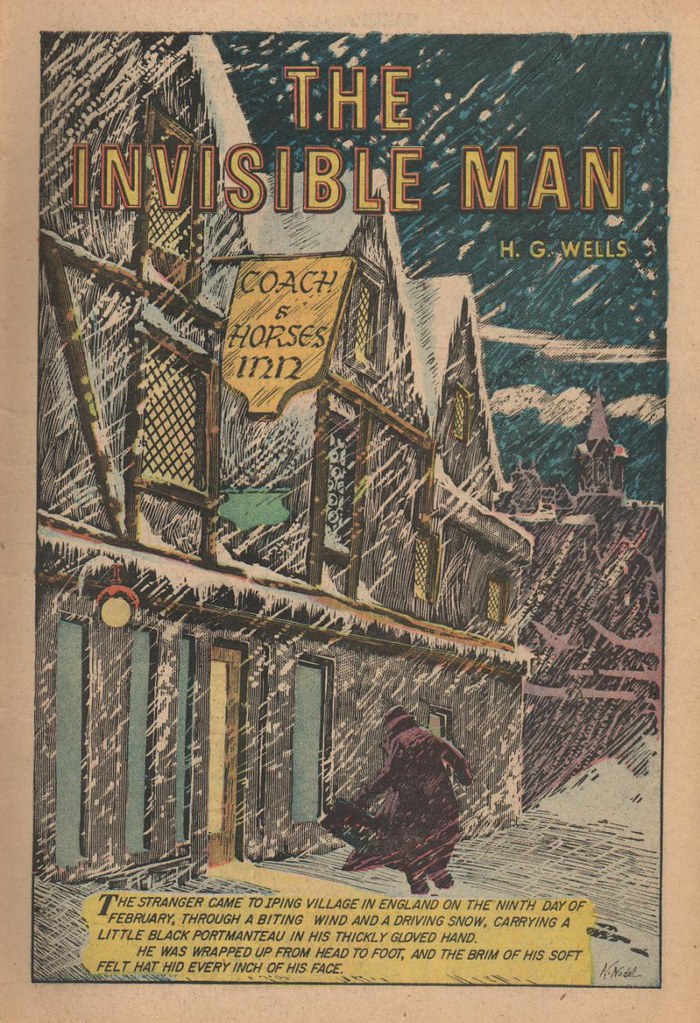
Classics Illustrated Invis Man cover Classics Illustrated title page
In 1959 Classics Illustrated #125 would feature an adaptation of the Wells novel with art by Geoffrey Biggs.  As in the last comic, this adaptation also ends with the final fate of the invisible man and completely cuts out the novel’s epilogue.  It makes me wonder if these comics were actually adapting the Universal movie instead of the book.

Marvel Comics would adapt the Invisible Man novel twice.

Marvel Supernatural Thrillers 01 Marvel Supernatural Thrillers 02
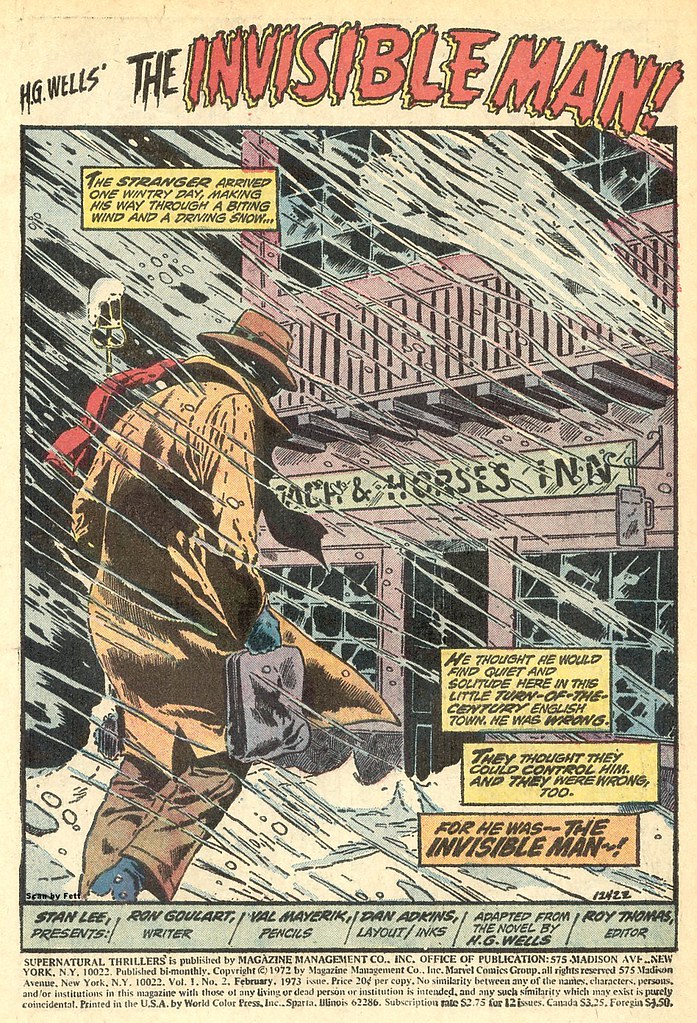
Marvel Supernatural Thrillers #2 from 1973 would feature an adaptation of Wells’ novel. It had a script by Ron Goulant and art/layouts by Dan Adkins and Val Mayerik.  The art looks pretty great in that early 70s Marvel style that I love so much.  Unlike the Classics Illustrated adaptation above, this comic features the epilogue.

Marvel Classics Comics 25 cover Marvel Classics Comics #25 title page
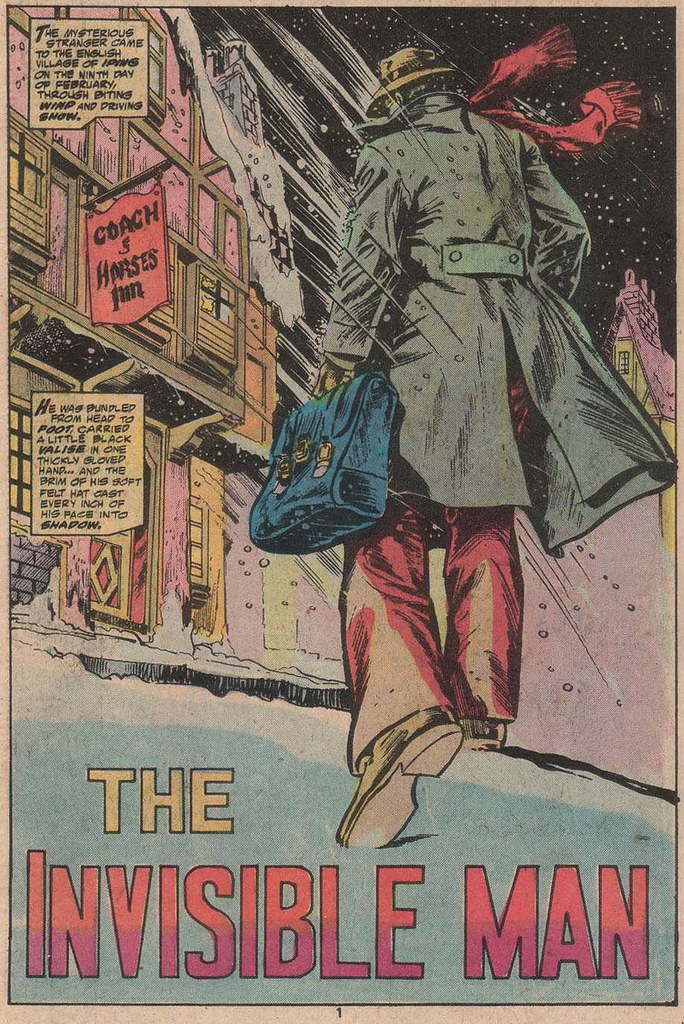
In 1977, Marvel Classics Comics #25 would again adapt the novel but this time with art by Dino Castrillo and Rudy Messina and a script by the great Doug Moench.  I’m surprised they didn’t just reprint the Supernatural Thrillers adaptation from four years earlier in this issue, but the art and layouts are great here as well in that 70s Marvel horror style.  And yes, this adaptation also includes the novel’s epilogue.  Not sure why the first two comics omitted it.


2015 banner
Also, check out the blog Countdown to Halloween for more Halloween-y, bloggy AWESOMEness.

AWESOME-tober-fest 2015: Universal’s The Invisible Man (1933)

Posted in Halloween, holiday, monsters, movies, pop culture with tags , , , , , , , , on October 2, 2015 by Paxton

Awesometoberfest banner

Yesterday I discussed ground zero for invisibility in pop culture, HG Wells’ The Invisible Man.  And if that book is ground zero, then Universal’s 1933 movie adaptation of that book would be ground one.  Second only to Wells’ book in influence on popular culture.  And, as a huge fan of the Universal Monsters series, it’s a little embarrassing that I’ve never watched Universal’s The Invisible Man with Claude Rains.  It’s high time I rectified that.

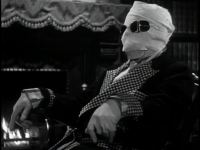
Invisible Man

Released in 1933, this movie has quite the pedigree. It’s directed by James Whale who also directed the first two Universal Frankenstein movies as well as Howard Hughes’ Hells Angels.  It starred Claude Rains who, while making his American theatrical debut, would go on to star in classic movies like Casablanca, Lawrence of Arabia and Mr Smith Goes to Washington.  It was a fairly popular movie that would spawn at least 4 sequels with varying successful degrees of connection to this original movie.  Rains would return for none of them.

I’m not sure why I never watched this movie before now.  I’m well aware of the Wells’ novel and this movie based on that novel starring Claude Rains.  I’ve even seen several more modern invisible man movies like Memoirs of an Invisible Man with Chevy Chase and Hollow Man with Kevin Bacon.  I’m just not sure why I never went back to this movie like I did with Frankenstein, Dracula and The Wolf Man.

So, now that I’ve seen it, let’s take a look at the movie.

vlcsnap-00052 vlcsnap-00056

It was kind of funny to see the “We Do Our Part” NRA title card pop up after the classic Universal bi-plane logo.  Different times, my friends.

vlcsnap-00057

The movie is pretty good. Nicely directed and looks pretty awesome but that’s not to be surprised since…well, James Whale. Claude Rains in his American feature film debut is pretty great as Griffin.  It’s easy to see why he was picked to play the lead.

The movie itself begins “en media res” with Griffin already turned invisible and sequestering himself into a hotel room in a secluded town.  Rains spends 99% of this movie completely covered in bandages or completely invisible.

vlcsnap-00085 vlcsnap-00079

The only thing we have to carry Rains’ performance, like I said, is his voice.  And it totally works.  His very deliberate way of speaking and the way his voice carries does everything to give the viewer what it needs for his performance.  And it’s especially effective the further into the movie you get and the more insane Griffin becomes.  His insane cackle is a thing to behold.

The movie was gorgeously dressed.  The set pieces were huge and very finely detailed.  From the hotel room and bar, to the cush offices of Rains’ former lab to the home of Gloria Stuart.  There is so much movie set “eye candy” to look at it almost distracts from the movie.  And I want Rains’ pimp smoking jacket in the above picture.  I wonder if he got to take that home.

Not much of the supporting cast lit me on fire. The main female lead is Gloria Stuart who is probably best known for playing “Old Rose” in James Cameron’s Titanic.  She is almost a non-entity in this movie, however.  We also get Una O’Conner who is a veteran character actor from the 30s-40s who would also appear in Bride of Frankenstein and The Adventures of Robin Hood.  She plays the wife of the innkeeper who shrilly shrieks her way through the first 20 minutes of the movie.  We also get a small, uncredited appearance by John Carradine who would go on to appear in several Universal Monsters pictures like Bride of Frankenstein, House of Frankenstein and House of Dracula.  He actually portrayed Dracula in the last two as well as the non-Universal Billy the Kid versus Dracula from 1966.

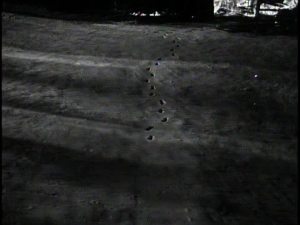
As for the invisible effects, they hold up pretty well, actually.  You can see some of the composite shots where they’ve placed footage of Rains disrobing in front of a black screen and superimposed it against the regular scene, but it’s honestly not that bad.  Some of the other physical effects, like footprints in the snow are actually very artfully done.
vlcsnap-00083

So, this is clearly identified as an adaptation of HG Wells’ novel, The Invisible Man.  So how does it hold up as an adaptation?  There are several differences between the two.  Some in character traits and motivations.  I tried not to dwell on it too much and let Claude Rains just take me away.  But the events of the movie closely follow the novel.  Certain scenes are removed and certain characters are changed or modified.  Like I said, though, I tried not to dwell on the differences and let the movie stand on its own.

I’d definitely recommend this movie. If only for Rains’ superb vocal performance and watching an invisible man slowly go insane. It was a really good watch and I’m glad I finally marked this one off my list.  My only regret is that Hammer Studios never got around to making their own version of The Invisible Man.


2015 banner
Also, check out the blog Countdown to Halloween for more Halloween-y, bloggy AWESOMEness.
AWESOME-tober-fest 2015: The Invisible Man (1897) – HG Wells

Posted in books, Classic literature, monsters, pop culture with tags , , , , , , , on October 1, 2015 by Paxton

Awesometoberfest banner

Yesterday, I talked about one of the very first uses of invisibility in literary fiction. Today, I’m going to discuss probably the most well known use of invisibility in literary fiction.  I decided to go ahead and lead with this book because so much of invisibility in pop culture is derived either from this novel or from Universal’s 1933 movie adaptation, which I’ll review tomorrow.

The Invisible Man was HG Wells’ fifth novel after such classics as The Time Machine and The Island of Dr Moreau. It was originally serialized in Pearson’s Weekly in 1897 but collected into a novel that same year.

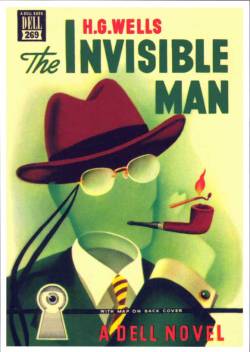
Invisible-man

Surprisingly, I had never read this book. I thought I would have been assigned it in high school or college, but that can also be said for several other classics I recently read for AWESOME-tober-fest like Frankenstein and Dracula.  Due to this I, again, have to thank AWESOME-tober-fest for manufacturing a reason for me to shoehorn this book into my reading list.  Let’s see if it was as good as Frankenstein or as bad as Dracula.

The book is certainly well written.  It begins with a mysteriously bandaged man arriving at a boarding house in the small English town of Iping.  The bandaged man not only looks mysterious, he is a very impatient man.  He immediately starts rubbing everyone the wrong way and eventually is kicked out of the boarding house when he can’t settle his bill.  This leads us to discover that he was a scientist who invented an invisibility serum and tested it on himself.  He was trying to work on a reversal serum when he arrived in Iping.

While down and out, he tries to rely on several people for help, but can’t seem to get it together.  All the while, he’s slowly going crazy from the chemicals he’s used on himself and fashions the idea that he’s going to take advantage of the invisibility and start a reign of terror to take over the country, starting with the citizens of Iping.  Will he succeed?

invisible-man-poster

The story is very well told.  I like the “mysterious stranger” beginning of the novel (despite that the mystery is completely dissolved by the blatant title of the novel).  Seeing Griffin arrive, begin behaving strange and treat everyone so contemptuously is a very in your face way to start the novel.  And I like it.  Eventually, the events that precede the novel are discussed at length about two thirds of the way into the story and by then, you are ready and anxious to hear how Griffin got to where he was.  And HG Wells doesn’t disappoint with the “science-y” talk.  While much of it might be well sounding gibberish, it certainly sounds impressive to hear Wells explain the invisibility science through Griffin.  And there were several disadvantages to invisibility that Wells mentions that I didn’t expect to be brought up like not being able to sleep because you can see right through your eyelids, or that you can see food digesting in your stomach for an hour after you’ve eaten.  Even down to the weather like rain or snow collecting on your head and shoulders making you visible again.  Or dirt and mud collecting on your feet and fingernails also making you visible.  I had expected these things to have come out of later novels and movies, but not this original story.

Things I didn’t like.  The book seemed a little long.  It felt like Wells was padding out the pages a little.  Especially during the scenes where Griffin is discussing what he did before the beginning of the novel.  Some of that stuff is great, but it also felt a little too long.  And some of the side characters have crazy dialects.  It’s supposed to be English countryside dialect, and I can’t speak to the accuracy of that, but it’s damn near unreadable.

But those are small nitpicks, honestly.  I would recommend this book.  Is it as good as Shelley’s Frankenstein?  No, but it’s definitely a good, fun read and I’m happy to say not complete garbage like another classic monster book I know (looking at you Dracula).


2015 banner
Also, check out the blog Countdown to Halloween for more Halloween-y, bloggy AWESOMEness.