Archive for nostalgia

Famous First Editions: A look at the origin of our most famous toys

Posted in Americana, nostalgia, pop culture with tags , , on June 4, 2010 by Paxton

There are so many toys that have become timeless. Toys your parents played with, toys you played with, toys your own kids will play with. As I’m soon to be a dad myself, I got to thinking about these toys that have become ubiquitous, that have spanned the generations to be enjoyed by different children in different eras.

Here are some of our most famous toys that have been around for decades and look to be around long after all of us are gone.
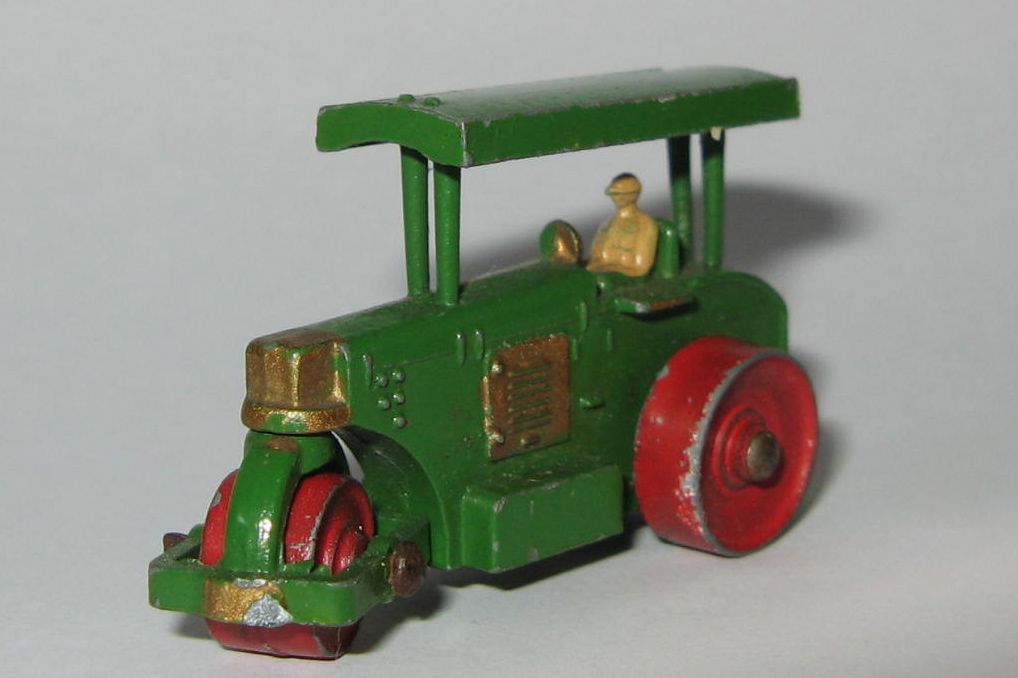
1st Matchbox car 1st matchbox car with box(Pics via darkens.net.nz)
Matchbox die cast cars – Matchbox cars were started in 1953 by British toy company Lesney Products. Co-owner Jack Odell created the idea for the tiny cars because his daughter was only allowed to bring toys to school if they could fit in a matchbox. So he decided to scale down one of their larger toys, the red and green road roller, and that became the #1 1A Diesel Road Roller (pic above), the first Matchbox car ever. A dump truck and a cement mixer would complete the first 3 cars in what would come to be known as the original “75 series” of Matchbox cars. The website darkens.net.nz is a great resource for pics and information on vintage Matchbox products.

1968 Sweet 16 Hot Wheels 68 cougar
Hot Wheels die cast cars – As seen above, Lesney dominated the small die cast car market from the time they introduced Matchbox cars throughout the ’60s. Mattel decided to throw it’s hat in the ring to grab some of that die cast money with it’s Hot Wheels line in 1968. That series of cars in 1968 has come to be known as the “Sweet 16” (see pic on left via Worthpoint.com). They were all released at roughly the same time, but the first numbered car was #6205a – The Custom Cougar (pic on right via Hot Wheels Wiki).

1st issue Barbie(via Dolls4Play)
Barbie – A Mattel executive’s wife noticed that all girls’ dolls looked like infants. There were no adult female dolls for kids to play with. When she brought this up to her husband he and the rest of Mattel were unenthusiastic about the idea. I mean, she was just a woman, what the hell did she know about dolls? Am I right? Anyway, on a trip to Europe the wife came across the German Bild Lili doll, which was an adult female doll based on a popular comic strip character. She bought three, brought them home to America and worked with Mattel engineer Jack Ryan to create the first Barbie doll which was named after her daughter, Barbara (see pic above). Barbie was introduced at the 1959 Toy Fair in New York.  Retailers were reluctant at first but within a year the dolls were selling out of stores across America.  Ken was introduced in 1961 (named after Barbara’s brother) and then Skipper in 1964 (no idea where that name came from).

Continue reading

The Origin of the Choose Your Own Adventure books

Posted in books, nostalgia, pop culture with tags , , , , on March 25, 2010 by Paxton

You're Going to Die CYOA
(via Something Awful)

I grew up loving Choose Your Own Adventure books. All of the different series were fun; Find Your Fate, Time Machine, Which Way. They all had interesting stories, some of them completely insane, and were fun to read. Shawn over at Branded in the ’80s has been reviewing a bunch of his off the wall, zany Find Your Fate books and it got me excited to finish this article I started over a year ago.  Let’s take a look at how the whole “Choose Your Own Adventure” genre started.  And, surprisingly, it started with one man, Edward Packard.

While telling stories to his kids, author Edward Packard came up with the idea of writing a book that the reader chooses how the story progresses.  In 1969 he would take this idea and write Sugarcane Island. Packard, at first, could not find a publisher who would print the book. However, in 1976, Vermont Crossroads Press bought it and printed the book which is now considered one of the first gamebooks ever published.

Sugarcane Island adv of you Sugarcane island which way Sugarcane Island cyoa
(via Demian’s Gamebook Page)

For the first printing, Sugarcane Island was released under the banner, The Adventures of You (on left). Its plot has you, the reader, aboard a ship that is wrecked by a huge wave and you must survive on an isolated and very dangerous island.  After being published in the Adventures of You series, Sugarcane Island was published under the Which Way banner (middle) in 1982.  Then, in 1986, it would finally come under the popular Choose Your Own Adventure banner (right), which was created by Packard.

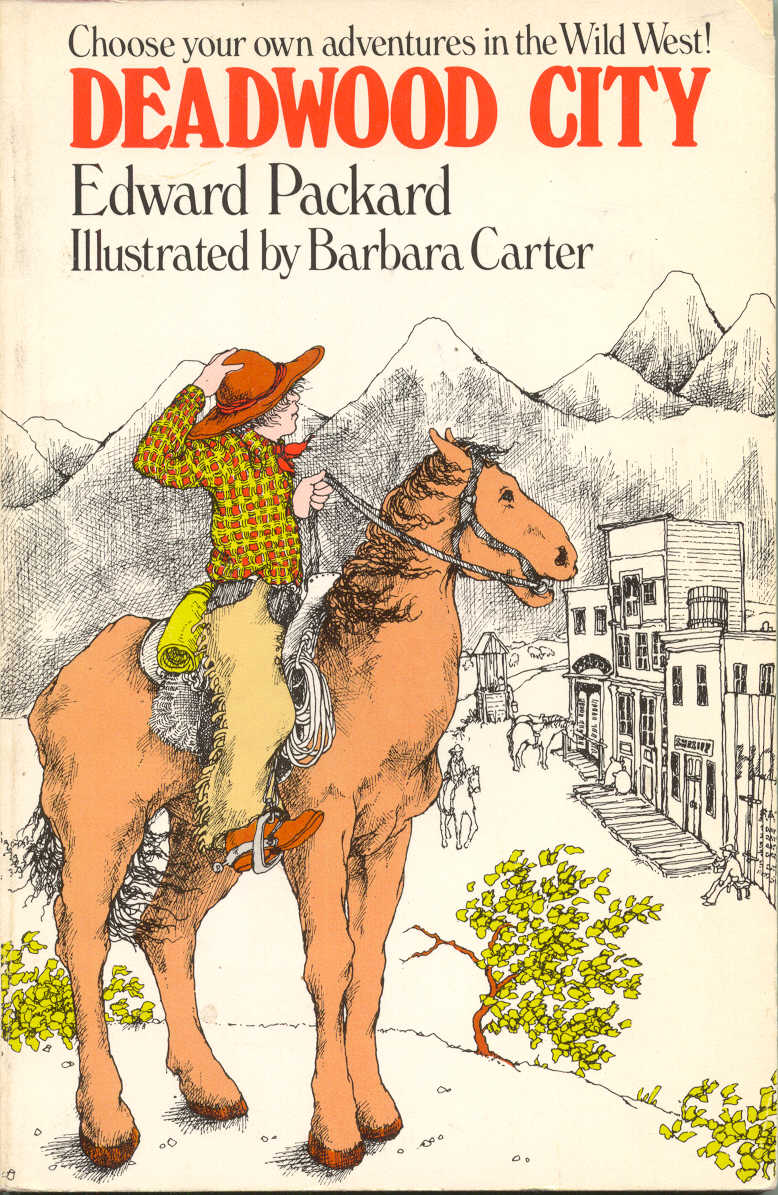
After Sugarcane Island, Packard published two more stand-alone gamebooks called Third Planet From Altair and Deadwood City.  The first was a Sci-Fi adventure giving the reader the task of determining the origin of extraterrestrial messages.  The second was a western casting the reader as a drifter into the town of Deadwood City looking for a job and finding adventure.  Neither of these stand alone gamebooks were as popular as Sugarcane Island.  Even though these two books were stand-alone, they both contain the phrase “choose your own adventure” on their covers and are considered the “unofficial” beginning of Packard’s Choose Your Own Adventure series.  Both Deadwood City and Third Planet from Altair would be reprinted under the Choose Your Own Adventure (CYOA) banner years later.

Deadwood City Third Planet from Altair
(via Demian’s Gamebook Page)

A separate writer, RA Montgomery, wrote a second book in the Adventures of You series called A Journey Under the Sea in 1977. Subsequently, this was to be the last book in the series, however it would also be reprinted under the CYOA banner.

Continue reading

9 Reasons why playgrounds back in the day were more AWESOME than today’s playgrounds

Posted in Americana, nostalgia, pop culture with tags , , , on March 19, 2010 by Paxton

Playland USA

Public playgrounds today are a bastion of nauseating safeness. Everything’s bolted to the ground and made of plastic. Slides are never higher than about 5-6 feet. Swings are engineered in a way that they can’t be swung scarily 10 feet into the air (how do they do that?). It’s all just so safe and boring.

When I was growing up, and even before that in the ’60s and ’70s, the playground was not only unsafe, it might possibly kill you. Everything was made of steel held together by sharp metal rivets and slides towered over 20 feet high oftentimes curly cue-ing around 3 or 4 times. It was awesome and it was insane at the same time.  It was awe-sane!!

I was looking at pictures on Flickr and I came across a group that had pictures of vintage playground equipment.  People had even posted scans of old catalogs featuring enormous metal constructs that were sold to be put on public playgrounds.  So, taking pictures from that vintage playground Flickr site, let’s take a look at how playgrounds from the ’60s, ’70s and ’80s are much more unbelievably bad ass than playgrounds are today.

Tire Mountain Tire Wall
Tire Swing buried tire
1. Stuff made from tires – Back in the ’70s, half of the playground consisted of stuff made with discarded tires. All you needed was some wood, metal chains, giant friggin’ nails and a few tires.  Chain a tire to a wood frame, you got a tire swing. Nail like 10 tires together and fasten them to another wood frame, you have a climbing wall. Hell, just take a giant tractor tire and bury half of it in the Earth.  What could be easier?  And safer?

Scary swing set 1 Scary swing 2
Scary swing 3 demon swing
2. Horrifying skinny clown swing sets – Check out these giant, skinny clown swings sets. These towering clown totems were TERRIFYING. They actually look less like swing sets and more like something a demonic clown cult would sacrifice small animals around.  Or maybe something Barnum & Bailey would tie you to if you snuck around their tents unsupervised.  And what’s that last swing set on the bottom right?  A lion?  Some circus demon?  Horrible.

merry go round 1 merry go round 2
3. Multi-colored metal carousels – Large metal merry go rounds that spun freely in either direction. More like “puke and go round”. Invariably, multiple kids would jump on it and then start spinning it faster than is totally necessary.  Next thing you know, kids are thrown 10 feet into the air,  getting dragged along the side in the dirt while holding on and others vomiting up their bologna sandwiches. It’s a wonder more kids didn’t die at the playground. Which made it all the more awesome.

Continue reading

The Grocery Aisle of long forgotten breakfast cereals Part III

Posted in Batman, breakfast cereal, movies, nostalgia, pop culture, Star Trek with tags , , , , , on March 16, 2010 by Paxton

Last year I wrote a two part article talking about long defunct breakfast cereals. They were both a very big hit. Dark Roasted Blend and The National Review Online picked them up and it exploded onto a bunch of other blogs after that. If you missed the first two parts of this article:

Read Part I here.
Read Part II here.

A big thanks to my friends Jackie and Steve for actually suggesting this topic to begin with.  Now, let’s take another stroll down Grocery Aisle 7c and examine a bunch more extinct breakfast cereals.

Freakies Fruity Freakies Cocoa Freakies
Freakies cereal was created in 1971 by Ralston-Purina and lasted until about 1977. However, despite most of the general public not really remembering it, the sloppy man-love for this cereal among cereal box enthusiasts is insane. These boxes are traded heavily amongst collectors with the Cocoa Freakies box going for around $800. I honestly don’t remember it, but there are a lot of people who do and would shell out truckloads of dough for certain boxes.  Here’s a commercial for Freakies.

Quisp and Quake Quangaroos
Quisp and Quake were introduced back in 1965 by the Quaker Oats company.  They were usually marketed together as rivals in much the same way as Baron Von Redberry and Sir Grapefellow.  The characters and animation for the cereals and commercials were done by Jay Ward who also created Rocky & Bullwinkle.  The commercial even uses some of the same voice talent as Rocky & Bullwinkle.  Check out a Quisp commercial here (you see Quake at the very end).  In 1970, Quaker ran a contest promotion to see which cereal was more popular.  Quisp won and Quake quietly left the shelves. However Quake would resurface later in the even more queerly named Quake’s Orange Quangaroos.  Quaker was totally committed to the whole ‘Q’ thing. See a Quangaroos commercial here. Retro boxes of both Quisp and Quake have been released to certain markets in the past few years.

Continue reading

Cola Wars: Awesome Vintage Coke commercials

Posted in 80s, Coca Cola, New Coke, pop culture, soda with tags , , , , , , on February 26, 2010 by Paxton

Sodapalooza

Yesterday I was reminiscing about the Coke/Pepsi “Cola Wars” back in the ’80s and ’90s. I took a look back at a bunch of Pepsi’s most famous commercials from that era. If you missed it, I urge you to check it out.

Now, let’s take a look at the other side of the coin, Coca-Cola. They have come up with some pretty famous commercials of their own. Let’s take a look back in time at some of Coke’s most famous TV ads.


Coke’s 1971 Teach the World to Sing commercial (video above) is undoubtedly their most famous advertisement.  It is so famous that it received two official sequels.  First, during the 1971 holiday season, Coke released a Christmas version of the commercial that ended in darkness with all the candles the people were holding in the shape of a Christmas tree. Then, in 2005, Coke inexplicably allowed singer/songwriter G Love to create a horrible douchebag hipster alternative rock version called Teach the World to Chill.  Might have been a worse idea than New Coke.


If the “hilltop” commercial above isn’t Coke’s most famous, then this 1979 Mean Joe Greene commercial is.  It’s still today a fantastic commercial.  Of course, in 2009, Coke filmed a sequel to the Mean Joe Greene commercial with Troy Polamalu.


The 11:30 Diet Coke break from 1996 is another popular Coke commercial.  I remember it airing what felt like every 5 minutes.  And, wait, I’m shocked to say this, but, in 2007 Coke filmed a sequel to the 11:30 commercial.  Talk about milking a concept dry.  I wonder if any of Coke’s commercials haven’t had a sequel.

Continue reading